
Schedule Consultation
Fill the form below and our medical team will contact you shortly.
Thank You!
Your enquiry has been submitted successfully.
Our team will contact you shortly.
Photodynamic Therapy (PDT) is a modern, non-invasive cancer treatment that uses a combination of light, oxygen, and a photosensitizing drug to selectively destroy cancer cells. It is widely used in treating tumors of the stomach, intestines, bronchial tubes, and other localized areas within the body.
Procedure Overview
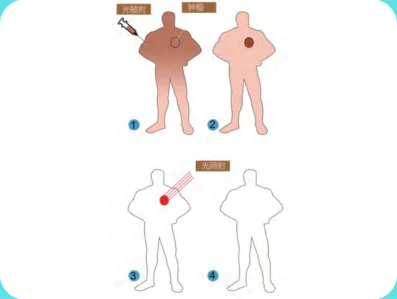
The procedure begins with the patient receiving an intravenous injection of a photosensitizer—a light-sensitive compound that selectively accumulates in cancerous cells. Over the next several hours, the drug localizes within tumor tissues. During this period, patients are kept in low-light conditions to avoid exposure to sunlight or bright lights.
After 40 to 90 hours, the treatment is performed under general anesthesia. Using an endoscopic device such as a gastroscope or colonoscope, a red laser light with a wavelength of approximately 630 nanometers is delivered to the tumor site via optical fibers. The light activates the photosensitizer, producing reactive oxygen species that destroy tumor cells.
Duration & Recovery
The entire PDT session typically lasts 30 to 60 minutes. Afterward, the patient remains under observation for another 30 minutes to ensure all vital signs are stable before returning to the ward. Most patients regain full consciousness shortly after the procedure.
Because the activating light penetrates up to 7 mm into tissue, tumors located deeper than this may require additional treatment sessions to ensure complete ablation.
Advantages of Photodynamic Therapy
- No Scarring: PDT uses laser fibers or endoscopic instruments, eliminating the need for surgical incisions or stitches.
- Non-Invasive: Only the illuminated tumor area is targeted, minimizing harm to nearby healthy tissues.
- Repeatable Treatment: Because PDT causes minimal systemic toxicity, it can be performed multiple times as needed.
- Symptom Relief for Advanced Cancer: PDT can help reduce tumor size, relieve obstruction, and improve the quality of life for patients with advanced or inoperable cancers.
- Synergistic Therapy: PDT can complement surgical or other cancer treatments. In some cases, it’s used post-surgery to eliminate residual tumor cells, reducing recurrence risk.
Key Notes
Patients are advised to avoid bright light exposure for at least 48 hours after photosensitizer injection. Protective measures such as staying indoors and wearing dark clothing or sunglasses are recommended. PDT is generally safe and well-tolerated, with temporary side effects such as mild pain or sensitivity to light in treated areas.
Our Specialties & Procedures
Explore our range of advanced cancer care procedures designed to provide comprehensive treatment and improve your well-being.

Advanced Therapies For Cancer
Innovative and precise cancer treatments combining advanced technology, targeted therapy, and personalized medicine for better recovery outcomes.
Explore More →
Treating Specific Cancer
Specialized treatment plans for different cancer types — including liver, lung, breast, and bone cancers — with a focus on patient comfort and long-term wellness.
Explore More →Our Specialties & Procedures
Explore our range of advanced cancer care procedures designed to provide comprehensive treatment and improve your well-being.
Advanced Therapies For Cancer
Innovative and precise cancer treatments combining advanced technology, targeted therapy, and personalized medicine for better recovery outcomes.
Explore More →
Treating Specific Cancer
Specialized treatment plans for different cancer types — including liver, lung, breast, and bone cancers — with a focus on patient comfort and long-term wellness.
Explore More →OUR ACHIEVEMENTS
Achievements of FUDA CANCER HOSPITAL

50+ Doctors
Professional Experts

1200+ Patients
Happy Indian Patients

100+ Countries
Global Presence

500+ Employees
Dedicated Workforce